
Ruminations on the far side of the moon…and much closer to home.
No communication. That seems perfectly plausible when you are on the far side of the moon. However, when you are in the seas just off the coast of San Diego, it feels like something from prehistoric times. You are NASA—this just shouldn’t happen.
Our 11-year-old granddaughter couldn’t quite grasp it as we watched the touchdown live on TV Friday night. When the astronauts aboard Artemis II splashed down, right on schedule after 10 days around the far side of the moon, you would think a simple communication link would be in place.
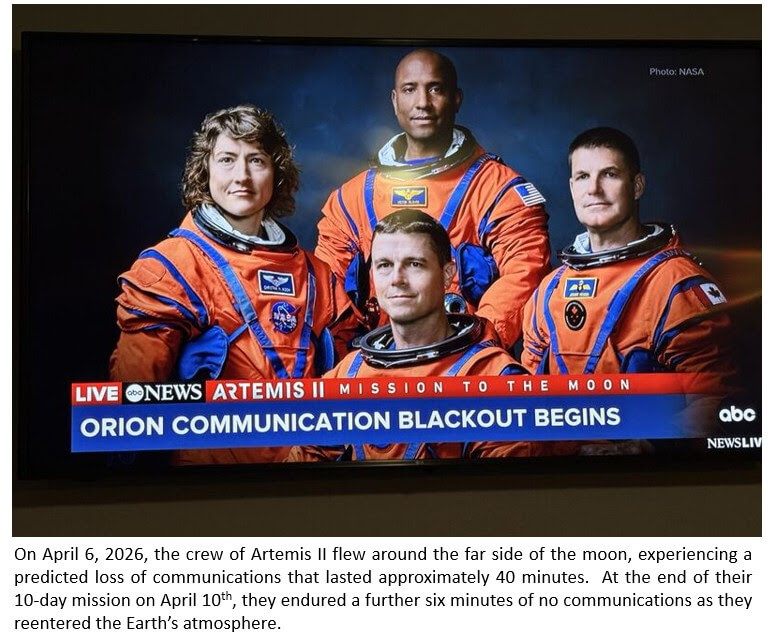
It wasn’t. We had to wait for the connection to come back up before hearing the good news: all were well, all four astronauts inside the capsule were “green” (stable), and ready to reenter life back home. Each one prepared to share every detail, every tidbit, everything they had seen and gathered.
Living Without Communication
Chris and I are living without communication every single day.
So many of you know our story and are rooting for us as we navigate something similar to what we saw with that NASA expedition. My husband had his larynx removed to save his life after a throat cancer diagnosis. Our “no comm” hasn’t lasted forty minutes on the far side of the moon—or even a brief moment after touchdown. We have been living this way since 2020. Over five and a half years.
Would I call our situation “no comm”? Absolutely not.
Our lives are rich with interaction, exchange, problem solving, and decision making. We keep things light when we can, and we handle the heavy when we must. What I can say is this: our communication holds an exquisite quiet, but it is never silent.

Clear, effective workplace communication is the foundation of high-performing teams. In today’s workplace, we are in almost constant contact with our coworkers. But what is effective communication, really? It is the exchange of ideas, thoughts, and information so that the message is both received and clearly understood. It requires listening skills, emotional intelligence, an understanding of interpersonal dynamics, awareness of context, and an abundance of patience.
Done well, communication builds trust, improves efficiency, and strengthens problem solving. Teams that communicate effectively are equipped to handle difficult situations and stay aligned with the work that matters most.
My passion, my mission, is to Open Lines of Communication in a Broken and Hurting World.
Every day, whether at work, at home, or with friends, we face moments where one wrong word, one hesitant look, or one moment of indifference can make or break an exchange. Here is what I have learned over several decades, and more recently through this new way of communicating with Chris. I hope these insights help you strengthen your own communication skills.
Pay Attention
Chris communicates through a writing tablet or mini whiteboard. He keeps several nearby so he can easily reach one when he wants to engage. When he picks one up, that is my signal—something important is about to be “said.” I stop what I am doing and give him my full attention.
Eye contact matters, even though he is looking down to write. If he could speak, he would be looking at me. I also watch his expression. What are his eyes saying right now? Sometimes I can tell this is something vital. Other times, I can see a bit of humor coming my way—something we both need.

Acknowledge Each Other
Acknowledgment is a fundamental human need. When we acknowledge someone, we validate their worth and strengthen their sense of belonging. When we don’t, we send the opposite message, whether we intend to or not.
Acknowledging is the number one service gesture. Think about the hospitality industry. If no one acknowledges you when you walk up to the counter, the message is clear: you don’t matter—take your business elsewhere. We have, in many ways, become a rude society simply through lack of response. I may receive upwards of 200 emails a day. Not all get a reply, but the ones from people I know do. A simple acknowledgment—“I received this and will follow up”—goes a long way.
In the restaurant world, it is two words: “Heard, Chef.” Simple. Clear. Effective. Find ways to acknowledge others. It says, again, you matter to me.
Know Others
Make time to truly know the people on your team. Our work with the Kolbe suite of tools for Team Success is invaluable. It provides language and understanding—how each person operates, what environment they need to thrive, and how they communicate best.
Chris thrives on order. Neat, tidy, and structured. When he has a plan, a map, and a repeatable process, it creates energy for him. I know this, and I adjust how I respond. It smooths our conversations. It helps us navigate disagreements. It accelerates resolution. When you know someone at their core, you show that you care enough to step off your own agenda and understand theirs.
Know the Context
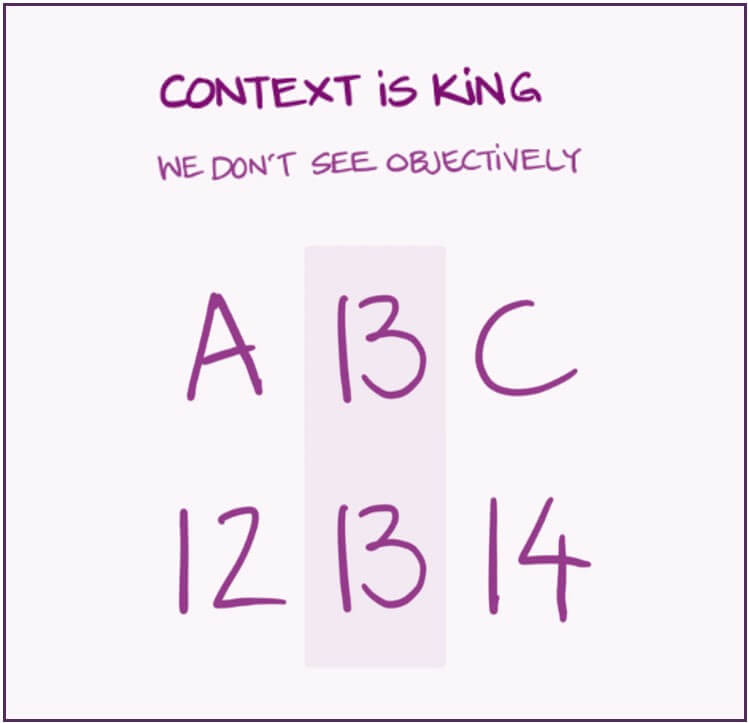
Over 90 percent of how Chris communicates is by pointing. That means I must understand the context of the moment. When he points, it could mean a thousand things. Do I get it wrong sometimes? Absolutely. But context narrows the possibilities.
Words and gestures change meaning depending on the situation, background, and experience. Without context, misunderstandings are almost guaranteed. It can be the difference between “I love the flowers on that tree in the spring,” and “I want to buy that tree.”
Context matters.
Provide Information and Establish Expectations
I often have a very small window to connect clearly with Chris, so each exchange must count. Clear communication includes both information and direction. It is assertive, respectful, and honest. I will often present two options: should we go left, or should we go right? This invites him into the decision. I am not doing something to him—we are doing it with each other. And yes, sometimes it still ends with, “No, we are not buying that tree.”
Consider Your Blind Spots
There is always a blind spot on the far side of the moon. The difference is that we expect it. In our own lives, blind spots are more dangerous when we don’t know they exist. We all have them.
Think about a vision test where lights flash in different areas. You suddenly realize it—there is a blind spot you didn’t even know you had. The same is true in communication. Pay attention to your reactions, especially the ones that feel immediate and negative. Those moments often point directly to a blind spot. Ask for honest feedback. Seek it out. Tools like the Kolbe A™ Index can also help uncover these areas and give you practical ways to manage them.
Be Patient. Be Kind.
Teams improve over time. Familiarity builds fluency. You begin to understand each other, sometimes with just a look or a gesture. But not everyone moves at the same pace. Artemis II reached speeds of 24,500 mph, but had to slow to just 17 mph for splashdown. Both speeds were necessary.
A team can only move as fast as its slowest member, but that does not mean the slowest pace should always set the tone. There must be a healthy dose of give and take. Speed matters. Precision matters. Be patient with those who are new, and with those still learning what you have already mastered.
The Far Side
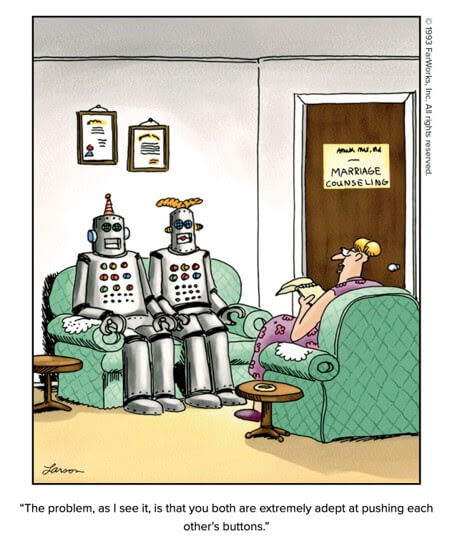
The Far Side comic by Gary Larson captured humor, discomfort, and the meaning of life in just a few words. That is great communication. Chris and I now live much of our life on “the far side.” We often have to get our point across in ten words or less and make sure it is understood exactly as intended.
There are landmines. There are missteps. There are days that feel like “no comm.” But there is also humor. There is connection. There is meaning. And when you experience the far side, it sharpens your awareness of what true, effective communication can be.
Reflect on Your Communication
As you reflect on your own communication, where are the gaps? Where are the opportunities?
If any part of this resonated with you, we would welcome the conversation. This work matters deeply to us, and we have seen what is possible when communication begins to shift, even in small ways.
We would be glad to hear your story. You can learn more or connect with us below.