
Time’s beauty lies in its impermanence. It shapes our experiences, defines our priorities, and influences our lives in countless ways. It is one of our most valuable resources, yet it is also one of the easiest to squander.
We judge ourselves, and often others, by how we spend our time. Strolling the Smithsonian, viewing a vista, or sitting seaside watching the tide roll away may feel deeply meaningful to one person and like a complete waste to another. Time is autobiographical.

Time. How would you define it?
We crave spending time as our bodies dictate. When life suddenly changes your allocation of time, your internal clock can go into a tailspin. Stress and tension escalate.
I know a bit about that.
Recently, an unfortunate misstep resulted in a broken jaw for my husband, Chris. In an instant, our time was no longer ours. It was hijacked.
When your time isn’t your own, every song on the radio suddenly seems to be about time. Time After Time. If I Could Turn Back Time. Does Anybody Really Know What Time It Is? But Rod Stewart’s words struck the deepest chord:
“Because life is so brief and time is a thief when you’re undecided. Like a fistful of sand, it can slip right through your hands.”

Kolbe and Time Orientation
Along with all the other insights the Kolbe A™ index provides, it can also help us understand our own—and others’—orientation toward time. This becomes especially valuable during times of crisis, transition, and unexpected anxiety at home or at work.
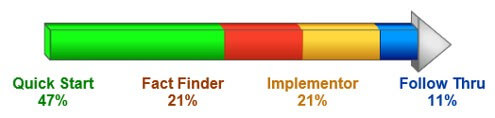
- Initiating Fact Finders deal with the past and use time to study, ask questions, and gather information before deciding.
- Initiating Follow Thrus connect the past and future through the present and use time to organize the path to get from here to there.
- Initiating Quick Starts live in the future and use time to spark change and get something new started.
- Initiating Implementors live in the here and now and use time to physically engage and execute.
Time orientation is a huge area of conflict when we need to navigate the tensions of life, work, relationships, and especially the expectations we place on ourselves.
Having autonomy over how we spend our time is an essential human need. When we understand our own and others’ relationship with time, we understand something fundamental about how people operate. The challenge is that we are almost always thinking from our own time zone. You think it can be accomplished in one note. They are lobbying for twelve.
On the Ledge
When we lose autonomy over our time, our mental health suffers.
I would describe the weeks after Chris’s fall as being “on the ledge.” Because Chris can no longer speak, the demands of the situation elevated my role as chief coordinator, scheduler, planner, arranger, and completer. Ironically, with my 2 in Follow Thru, I have the least amount of energy for such tasks.

I’ve come to believe that time orientation is really about energy allocation.
People often say, “I don’t have time for that.” More accurately, they mean, “I don’t have the energy for that.” Without this insight, I could easily react negatively. But years as a Kolbe practitioner have taught me how to recognize what my body is doing and regain some control over my response.
Take Back Your Time
My goal is to help others recognize these shifts in roles, responsibilities, and expectations before ledge-like stress and burnout occur.
Step One: Recognize When Your Time Is No Longer Your Own
Acknowledge it. Accept it. The mere act of naming this reality is liberating.
Contemplate your own sense of time. Reflect on what feels off-kilter and why. Ask yourself what has changed and where your energy is being spent. Invite me to provide coaching for you during this introspection.
Gaining insight into your natural orientation toward time is time well spent.
Here is my Time Arrow. As a 4294, this is how my problem-solving energy is allocated.
Step Two: Care About the New Responsibilities
We commit time to what matters.
Caring may come naturally for family members, but it can require more intentionality in the workplace. I care that the team improves. I care that the wedding comes off without a hitch. I care that the mission is accomplished. I care that the necessary appointments get scheduled.
Care creates commitment.
Ask yourself: What effort am I willing to invest for the people who need my time—at home and at work? When we care, we can do almost anything in the short term.
Step Three: Shift Your Approach
You don’t need to become someone else. The key is shifting your approach to a more natural one that gives you the autonomy of choice.
I often say, “I will gladly take care of that—just not right now.”
Ask yourself: How can I use my natural time orientation to meet this moment?
Each Action Mode® has a trigger:
- Fact Finders shift to Priorities.
- Follow Thrus shift to Plans.
- Quick Starts shift to Potential.
- Implementors shift to the Physical.
Thankfully, they all begin with “P.” My personal go-to questions are: What do I need to start to get this done? What are the physical things I can do to move this forward? A Fact Finder facing unexpected Quick Start demands might ask: How do I make these imposed changes a priority?
Step Four: Reclaim Your Rituals
The moment a disruptive event occurs, your system gets out of alignment. Don’t let it shut down completely. The sooner you reclaim your rituals—sleep, exercise, reading, healthy eating—the more you regain a sense of control. Make time for these things. Walking, working out, reading, and regular sleep are my rituals.
Whatever your rituals are, build them back into your schedule as soon as the crisis is under control. Don’t feel guilty. And certainly don’t become a martyr.
From moments of joy to seasons of challenge, how we perceive and use time plays a decisive role in our personal and professional lives.
Every one of us has sixty minutes in the coming hour. How will you use your sixty?
Maybe your choice will be sitting on the dock of the bay, watching the tide roll away.
When we have the freedom to choose, life feels full. That is the advantage.

At PSG, we help teams build greater autonomy, reduce unnecessary stress, and work together more effectively—even in today’s landscape of burnout and disengagement.
Sometimes the first step toward a better solution is simply understanding how each person uses their time.